Recently, the third revised edition of the ISO 19901-4 standard, Oil and gas industries including lower carbon energy – Specific requirements for offshore structures – Part 4: Geotechnical design considerations, was officially published. A series of research findings by Professor Zhang Youhu from our university on the horizontal pile-soil interaction of offshore steel pipe piles have been incorporated into this standard. The static and cyclic p-y spring method for horizontal pile-soil interaction in clay seabeds, proposed by Professor Zhang, has now replaced the Matlock method—used in the industry since 1972—as the recommended approach in the ISO international standard.
The Matlock method originated in the 1950s in response to oil and gas development needs in the Gulf of Mexico. It was an empirical approach derived from limited field pile load tests by American scholars, lacking a connection to seabed soil mechanical properties and failing to reflect the actual load-bearing characteristics of steel pipe piles. Based on the scientific principle that macro-level pile-soil interaction force-displacement responses are an integrated manifestation of soil stress-strain behavior within the influence zone, Professor Zhang Youhu innovatively proposed a method to derive monotonic and cyclic p-y springs from soil stress-strain relationships. This method is highly versatile, easy to apply, and effectively accounts for site-specific seabed soil stress-strain behavior and cyclic loading characteristics of structures, addressing the limitations of the Matlock empirical model and significantly improving the accuracy of offshore steel pipe pile design. In recent years, it has been successfully applied in multiple domestic and international oil and gas projects as well as offshore wind power projects, demonstrating excellent performance.
Professor Zhang Youhu has long been dedicated to the field of marine geotechnics. He earned his bachelor's degree in geotechnical engineering from Jilin University in 2008 and his Ph.D. in offshore geotechnical engineering from the University of Western Australia in 2013. From 2013 to 2021, he worked at the Norwegian Geotechnical Institute (NGI), a world-leading consulting and research organization in marine geotechnics. In 2021, he joined Southeast University as a full-time faculty member and currently serves as a Distinguished Young Professor and doctoral advisor.
It is reported that in response to challenges in China's offshore wind power sector—such as soft soil conditions, ultra-large-diameter monopile installations, high construction difficulty, and costs—Professor Zhang Youhu's team is currently conducting in-depth research on the stiffness and damping of horizontal pile-soil interaction for large-diameter monopiles. Their goal is to develop key load-reduction and weight-optimization technologies, further advancing the design of offshore ultra-large-diameter steel pipe piles.

The latest edition of the ISO 19901-4 international standard
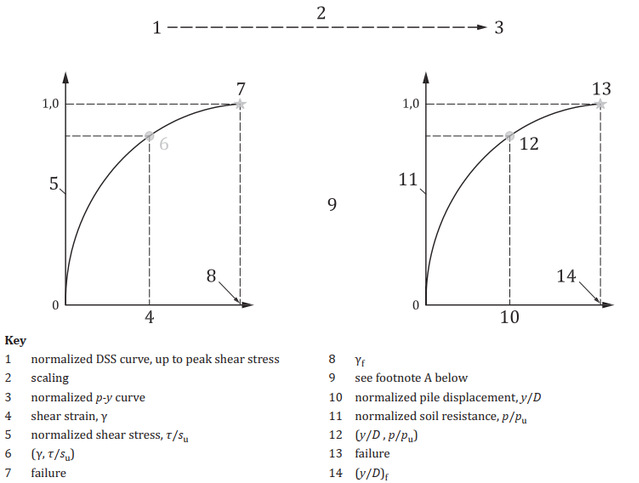
The monotonic loading p-y spring method has been adopted as a recommended approach in the latest edition of ISO 19901-4 standard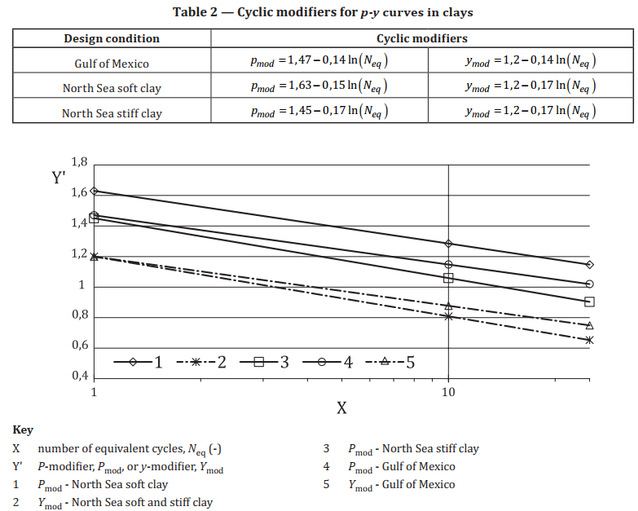
The cyclic loading p-y spring method has been formally adopted as the recommended approach in the latest edition of ISO 19901-4 standard